
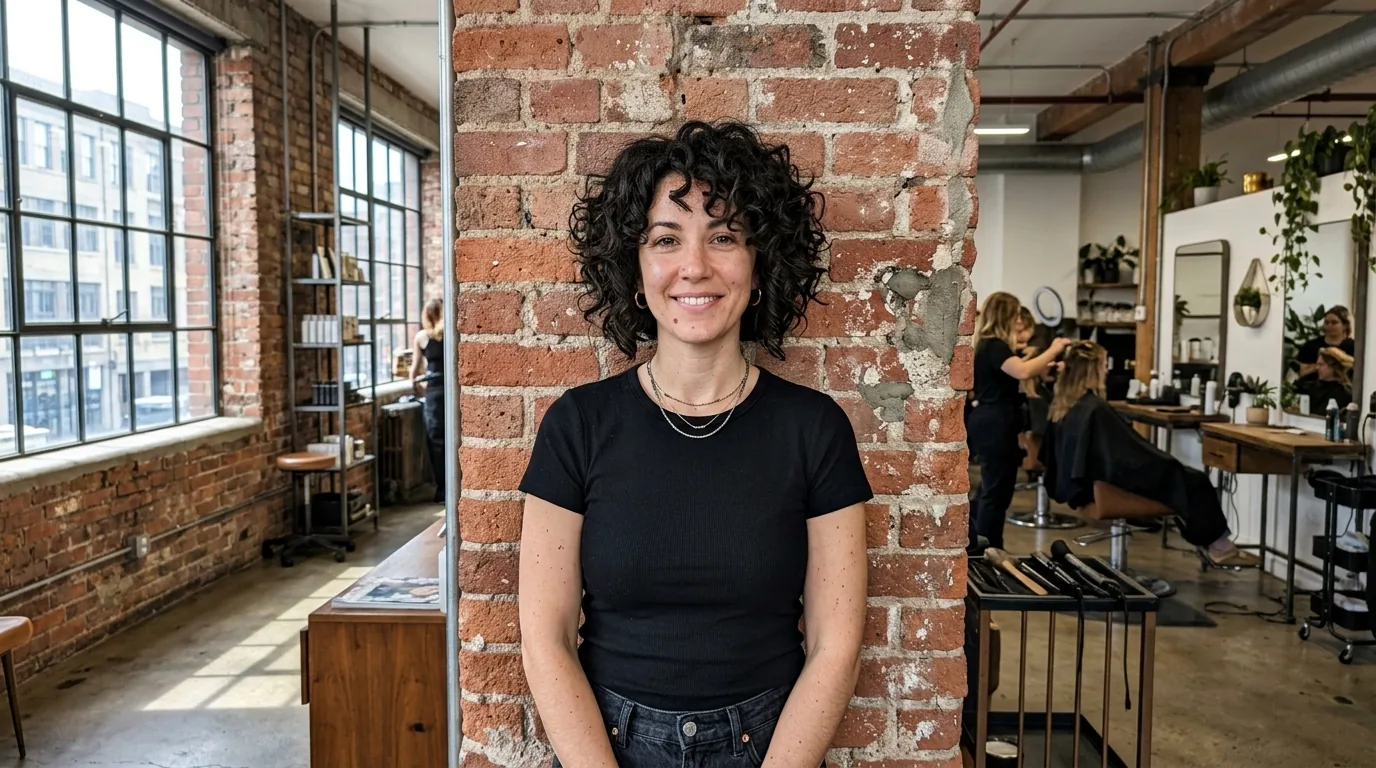

I spent most of my twenties looking like a human cotton ball. Every time I asked for a “cute short curly cut,” I’d walk out looking wider than I walked in. My round face and my spirals seemed destined to work against each other until I finally figured out the secret: it’s not about the length, it’s about the angles.
After years of bad cuts and countless styling experiments, I’ve cracked the code on short curly cuts for round faces. The key is understanding how curl patterns interact with face shapes — something most stylists just don’t get.
Why Most Curly Cuts Go Wrong on Round Faces
Here’s the thing nobody tells you: most stylists approach curly hair like it’s just wavy hair having a bad day. They’ll give you a basic bob and expect your curls to “fall into place.” But curls don’t fall — they bounce, they shrink, they do whatever they want.
When you have a round face, this becomes a disaster. Your curls naturally want to expand outward, which emphasizes the width of your face. I learned this the hard way when I got what I thought was a “long bob” that turned into a triangle after one wash.
The real problem? Most cuts ignore curl shrinkage entirely. That cute shoulder-length style you see on Instagram will hit at your earlobes once your curls spring up. And if you’re like me, that’s exactly where you don’t want extra width.
The Three Golden Rules I Live By
After enough bad cuts to fill a photo album, I developed three non-negotiable rules for short curly cuts on round faces:
- Height over width, always. If a cut adds volume to the sides of my head, it’s a no. I need height at the crown to elongate my face shape.
- Asymmetry is my friend. Perfectly symmetrical cuts make round faces look even rounder. I always ask for slightly longer pieces on one side.
- The chin line is sacred. Nothing should hit exactly at my chin unless it’s angled. That horizontal line just emphasizes the roundness.
These rules have saved me from so many styling disasters. But the real magic happens when you find cuts that follow all three principles.
My Favorite Cuts That Add Height and Angles
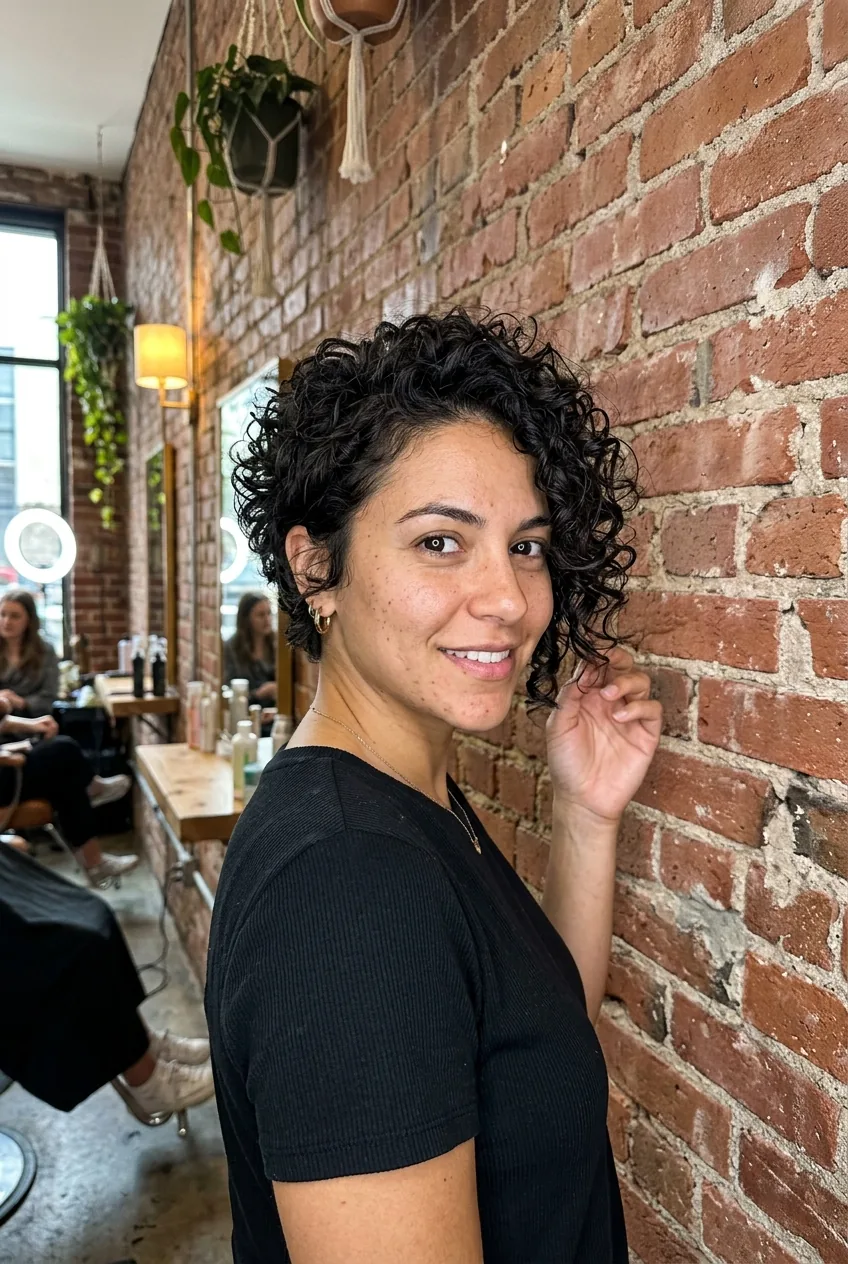
The pixie cut gets all the attention, but honestly? There are better options for round faces with curls. My current favorite is what I call the “angled bob” — it’s longer in front than in back, with the longest pieces hitting just below my jawline.
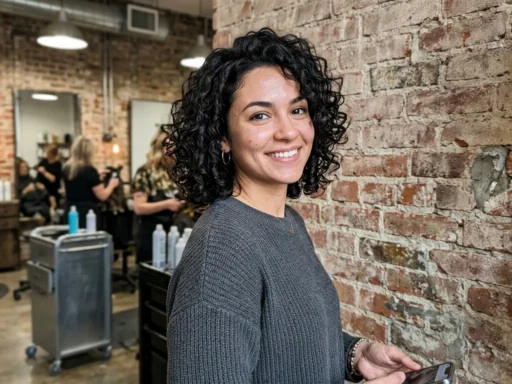
Look at how she’s styled this cut — see how the longer front pieces create diagonal lines? That’s exactly what I mean about adding angles instead of curves. The height at the crown draws the eye up, while the angled sides create the illusion of a longer face.
Another winner is the textured crop. It sounds scary short, but when done right, it’s incredibly flattering. The key is keeping more length on top and going shorter on the sides. This creates that crucial height while keeping the sides sleek.
I’ve also had great success with layered cuts that are longer in front than back. The layers need to be cut specifically for your curl pattern though — edgy cuts like these show how dramatic angles can work with texture.
Texture is Everything (Seriously)
Can we talk about texture for a minute? Because this is where most people get it wrong.
“The goal isn’t to tame your curls — it’s to direct them.”
That’s what my current stylist told me, and it changed everything. Instead of fighting my natural texture, I learned to work with it. Curly hair naturally adds volume, so why not use that to our advantage?
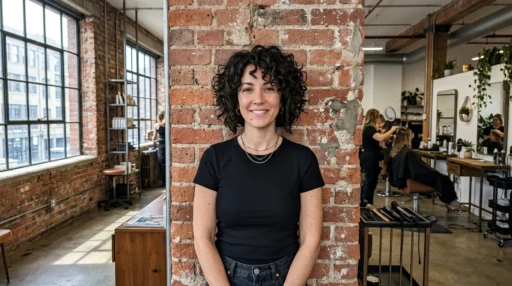
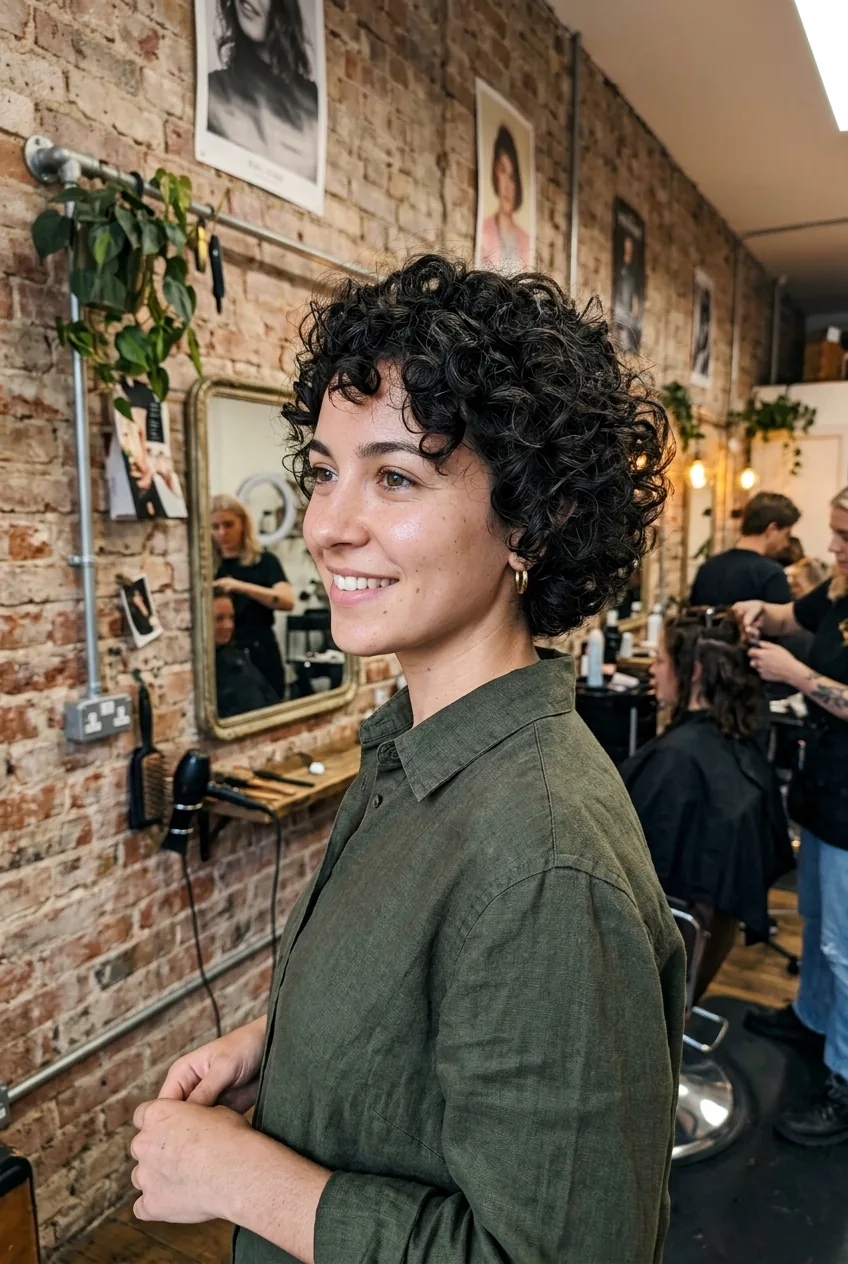
This is the texture I’m talking about — see how it’s not perfectly defined, but it has movement and body? That’s what happens when you embrace the natural patterns instead of trying to force them into submission. The slightly messy texture actually helps break up the roundness of the face.
I’ve found that curl-enhancing creams work better than gels for this look. They give you texture without the crunch, which is crucial for short cuts where every curl matters.
This Stylist Gets Curly Texture Right
Styling Secrets That Make or Break the Look
Here’s my controversial opinion: most curly girls are over-styling their hair. All those products, all that scrunching and diffusing — sometimes less really is more.
My current routine is embarrassingly simple. I wash with a gentle cleanser (not even a “curl-specific” one), apply a lightweight leave-in conditioner, and scrunch out excess water with a microfiber towel. That’s it.
The magic happens in the cut, not the styling. When you have the right cut for your face shape, your curls naturally fall where they should. I spent years trying to make bad cuts work with products when I should have just gotten a better cut.
But here’s one styling trick that actually matters: how you sleep. I invested in a silk pillowcase and started “pineappling” my curls (loosely tying them at the very top of my head). This maintains the height overnight, which is crucial for round faces.
For inspiration on how different cuts can work, check out these real women rocking short cuts — they show how the same principles apply to different hair types.
The One Cut I Tell Everyone to Avoid
Okay, unpopular opinion time: the classic curly bob is terrible for round faces. I said it.
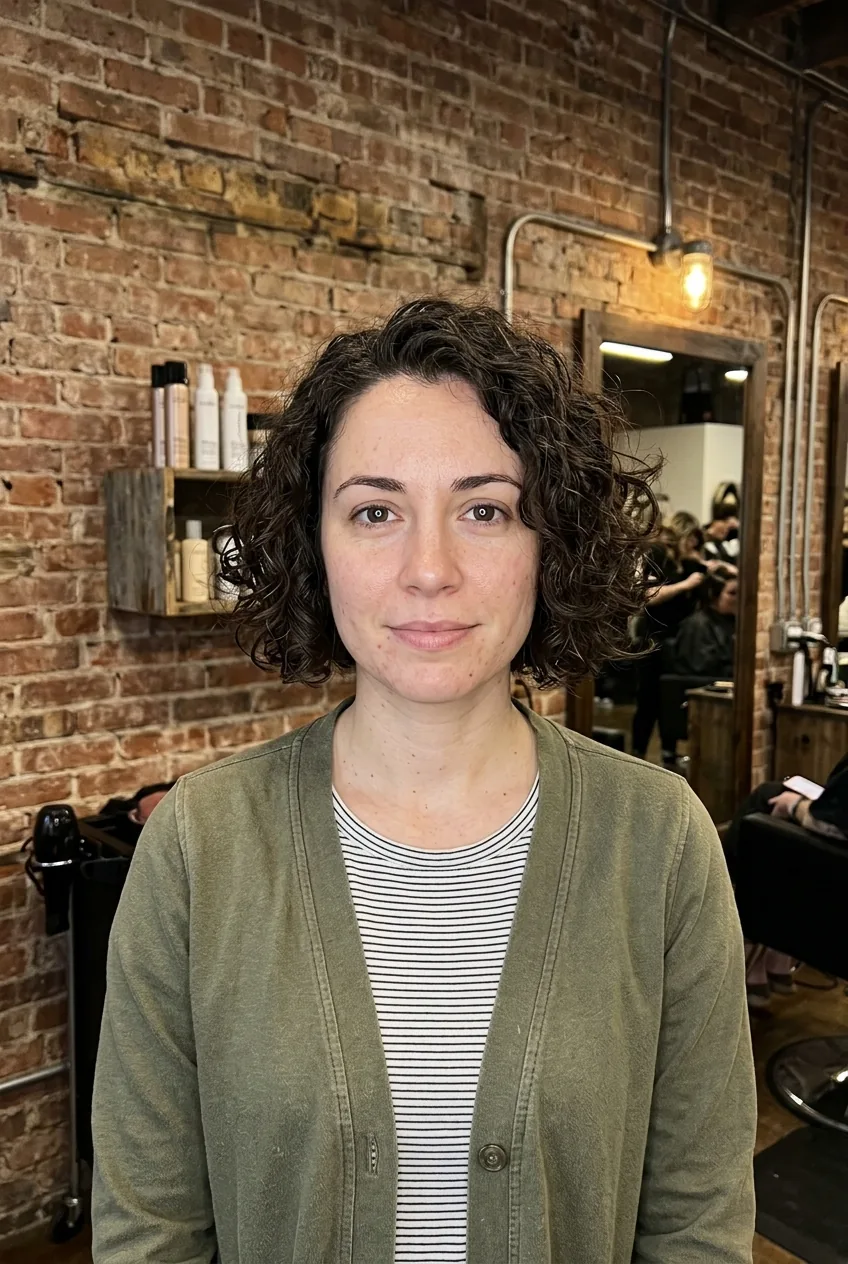
You know the one I mean — same length all around, hitting somewhere between your chin and shoulders, perfectly symmetrical. It’s the “safe” choice that every stylist suggests. And it’s exactly wrong for us.
See how this style creates a horizontal line right at the widest part of her face? That’s the problem. All that beautiful curl volume is sitting exactly where we don’t want extra width. It’s like wearing horizontal stripes when you want to look taller.
I tried this cut three different times with three different stylists, thinking I just needed the “right” version. Nope. The problem isn’t the execution — it’s the concept. Round faces need angles, not curves.
If you love the idea of a bob, go for an angled one instead. Or try a slightly asymmetrical version where one side is longer than the other. Just avoid that perfectly round shape that mirrors your face.
Finding the right short curly cut for a round face isn’t about following trends — it’s about understanding how your natural texture works with your face shape. Once you get that relationship right, everything else falls into place.
Trust me, after years of triangle hair and cotton ball moments, I finally have a cut that makes me feel confident walking out of the salon. And more importantly, it still looks good three months later.