



I spent fifteen years trying to make my curls behave like they were straight hair. Blow-drying until my arms ached, flat-ironing every single morning, sleeping on silk pillowcases like they were some kind of magical cure. Then last spring, I walked into a salon and asked for something I’d never tried before: a cut that actually worked WITH my natural curls instead of against them. The transformation wasn’t just visual — it was life-changing.
The Length That Changed Everything

Here’s what I wish someone had told me years ago: the magic happens right at chin level. Not shoulder-grazing, not pixie-short, but that perfect sweet spot where your curls have just enough weight to form gorgeous spirals without getting pulled down by their own heaviness.
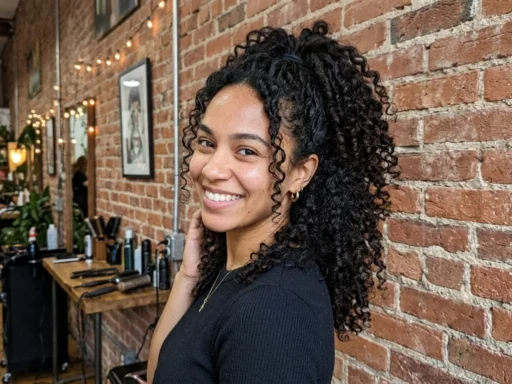
Look at how she’s styling hers in this photo — that bounce is exactly what I mean. When I finally cut mine to this length, I actually gasped at my reflection. My curls weren’t fighting gravity anymore. They were working with it.
The science behind it is simple. Shorter curls spring up more dramatically because there’s less weight pulling them down. But there’s an art to getting the exact right length for YOUR curl pattern. I learned this the hard way after three mediocre cuts that were either too long (stringy) or too short (triangle head syndrome).
Texture Is Everything (Fight Me)

Can we talk about how obsessed everyone is with “definition”? I’m so tired of curl tutorials that promise perfectly separated, Instagram-ready spirals. That’s not how natural curls work, and honestly? I don’t want them to.
The best short curly cuts natural curls can handle are the ones that embrace a little chaos. See how her hair has that perfectly imperfect texture? That’s what real curls look like when they’re healthy and happy.
I’ve started telling my stylist to cut for movement, not precision. This means:
- Varying lengths that create natural volume
- Removing bulk without destroying curl clumps
- Leaving some pieces longer for face-framing
- Working with your cowlicks instead of against them
This Stylist Nails the Technique
Face Shape Reality Check

Every curly girl has heard the “face shape rules.” Round faces need length. Square faces need softness. Heart shapes need width at the jaw. But you know what? Sometimes the rules are wrong.
I have a round face. According to every beauty magazine, I should avoid short hair. But this cut — this gorgeous, bouncy, chin-length miracle — makes my cheekbones pop in ways longer hair never did. She’s got a similar face shape to mine, and honestly, this cut looks incredible on her.
The secret isn’t following arbitrary rules. It’s understanding how YOUR specific curls behave around YOUR specific features. Do they spring up and create volume at your temples? Work with that. Do they fall flat against your neck? Cut them shorter there. Short curly cuts that actually work in real life are about customization, not cookie-cutter formulas.
The Styling Game Changer

After the cut, everything about my morning routine shifted. No more twenty-minute blow-dry sessions. No more checking the weather forecast to see if humidity would ruin my day.
My new routine is embarrassingly simple: wet hair, scrunch in some cream, and walk away. That’s it. Look at the effortless texture she’s achieved here — this is what happens when you stop fighting your natural pattern and start enhancing it instead.
The game-changing products I actually use:
- A lightweight curl cream (not gel — gel makes my curls crunchy)
- Microfiber towel for gentle scrunching
- Wide-tooth comb, used only on wet hair
- Diffuser attachment for days when I’m in a hurry
But here’s the thing — curl styling techniques matter less than the foundation of a good cut. I spent years trying to style a bad haircut into submission. Now I barely have to try.
What Your Stylist Won’t Tell You

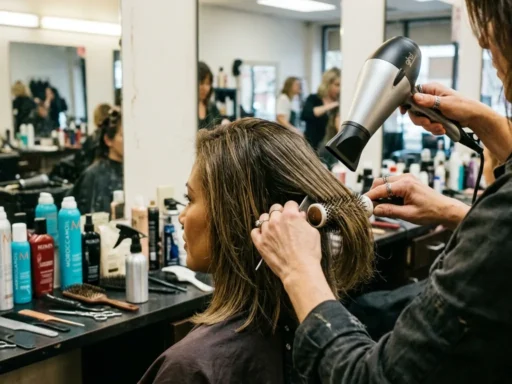
Not every stylist knows how to cut curly hair. I’m sorry to be blunt, but it’s true. I’ve sat in chairs where stylists stretched my curls straight to cut them, or used thinning shears that destroyed my curl pattern completely.
The best curly cuts happen on dry hair. Period. Your stylist should see exactly how your curls fall naturally before making a single snip. They should understand shrinkage — how much shorter your hair will look when it dries versus when it’s wet and stretched.
Questions to ask before you sit down:
“Do you cut curly hair dry or wet?” “How do you handle shrinkage?” “Can you show me photos of curly cuts you’ve done recently?”
If they can’t answer confidently, walk away. Your curls deserve someone who understands them. Edgy pixie cuts that actually work for real women require this same level of expertise, just with even more precision.
My Controversial Opinion on Layers

Ready for this? I think most curly girls get too many layers. There, I said it.
Everyone assumes curls need layers for movement and volume. But sometimes layers just create chaos. Especially in short cuts, where you don’t have length to anchor the style.
Look at the clean lines in this cut. Minimal layering, maximum impact. The shape comes from the perimeter, not from internal layers that can make curls look choppy and disconnected.
I’ve learned to ask for “long layers only where needed for face-framing.” This gives me movement without the unpredictable volume spikes that heavy layering can create. Some curl patterns thrive on layers — loose waves, especially. But tight coils and spirals? Often less is more.
My stylist calls it “architectural cutting” — creating shape through the outline rather than relying on internal texture. It sounds fancy, but the results speak for themselves. Short curly cuts that actually work for real life prioritize wearability over Instagram drama.
The maintenance is simpler too. Fewer layers mean fewer pieces to style individually. When I wake up in the morning, my curls fall into place because the cut works with their natural growth pattern instead of fighting it.
Six months later, I’m still amazed by how one good cut changed everything. My confidence, my morning routine, even my relationship with humidity. If you’ve been fighting your curls like I was, maybe it’s time to stop fighting and start collaborating instead. Your natural texture knows what it wants to do — sometimes we just need to get out of its way.