



I used to think ponytails were the enemy of curly hair. Every attempt looked like I’d stuck my finger in an electrical socket, then tried to tame it with a hair tie. The curls would go flat where the elastic sat, frizz everywhere else, and by lunch? Forget it. But after years of trial and error (and some epic fails), I’ve cracked the code on curly ponytails that actually look intentional.
High vs Low: The Placement Game
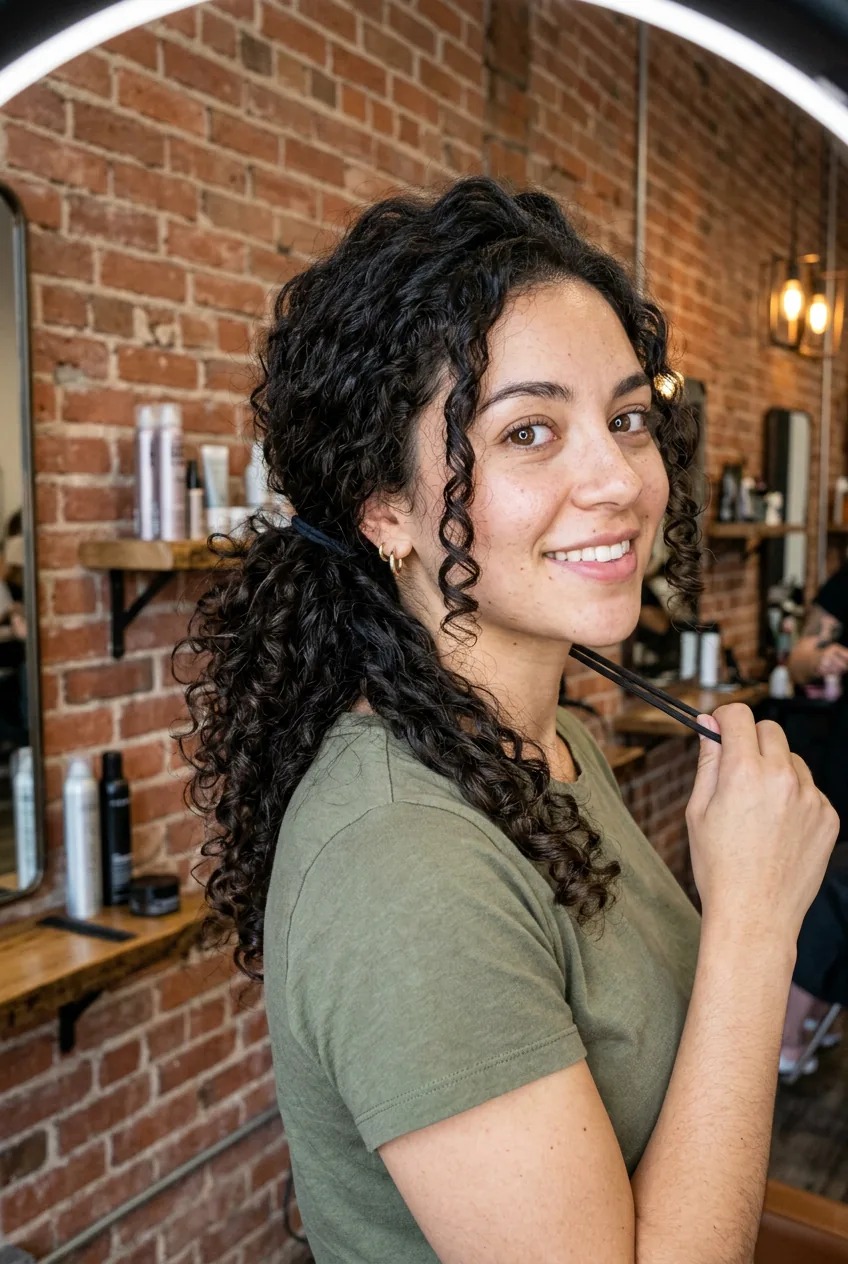
Here’s where most people get it wrong — they think high ponytails are automatically more flattering. Not with curls, they’re not.
High ponytails work best on looser curl patterns (think 2C to 3A). The bounce sits nicely at the crown, and you get that youthful, energetic vibe. But if you’ve got tighter coils like me? That high placement can look severe and pull your face in ways that aren’t doing you any favors.
Low ponytails, on the other hand, are forgiving as hell. She’s positioned at the nape of her neck in the photo, and look how naturally the curls cascade. That’s the sweet spot for 3B and 3C hair. The weight distribution feels more balanced, and you’re not fighting gravity as much.
Mid-level ponytails? They’re the middle child nobody talks about, but honestly, they might be the most versatile. Right at the occipital bone — that’s the bump at the back of your head. Professional enough for work, casual enough for weekend errands.
My Curl Pattern Reality Check
Can we talk about something that nobody else will? Not every curly ponytail technique works for every curl pattern, and the internet pretends like it does.
I’m a solid 3B with some 3C sections (thanks, genetics), and those Pinterest-perfect “messy bun” tutorials? They look like organized chaos on looser curls and complete disaster on mine. The volume overwhelms everything, and don’t get me started on trying to make those “effortless” wispy pieces work.
What actually works for tighter curls:
- Wet styling only — trying to manipulate dry curls into a ponytail is a recipe for frizz
- Gentle gathering with a wide-tooth comb or fingers only
- Using the “pineapple” method for overnight protection (game changer)
- Accepting that your ponytail will look different every single time
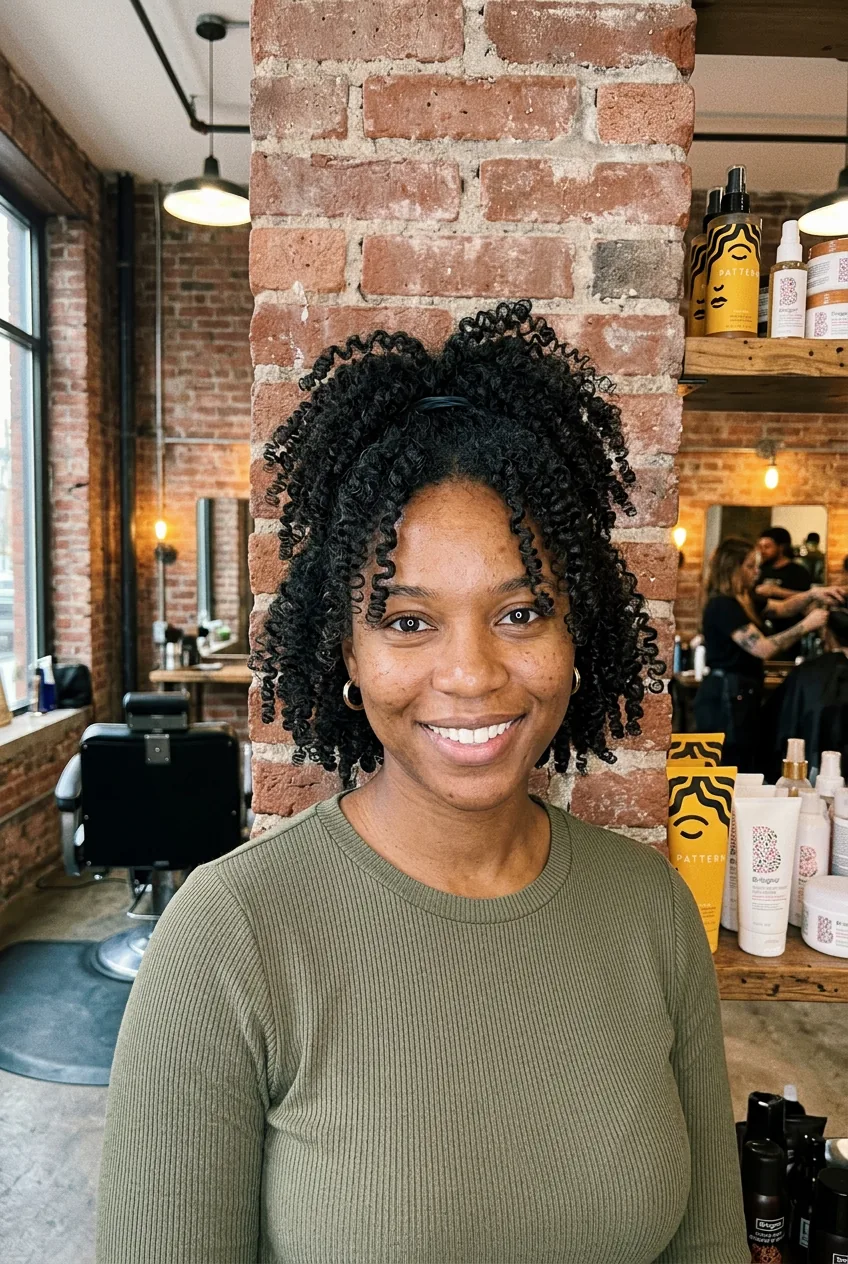
Look at how she’s styled hers — the curls maintain their individual pattern while still looking cohesive. That doesn’t happen by accident. It takes the right products and technique, which brings me to my next point.
The Products That Changed Everything
I spent way too much money figuring this out, so let me save you some cash and heartbreak.
First, throw out every hair tie that isn’t satin, silk, or those spiral plastic ones. Regular elastic bands are curl killers. They create dents and breakage, and nobody has time for that kind of setback.
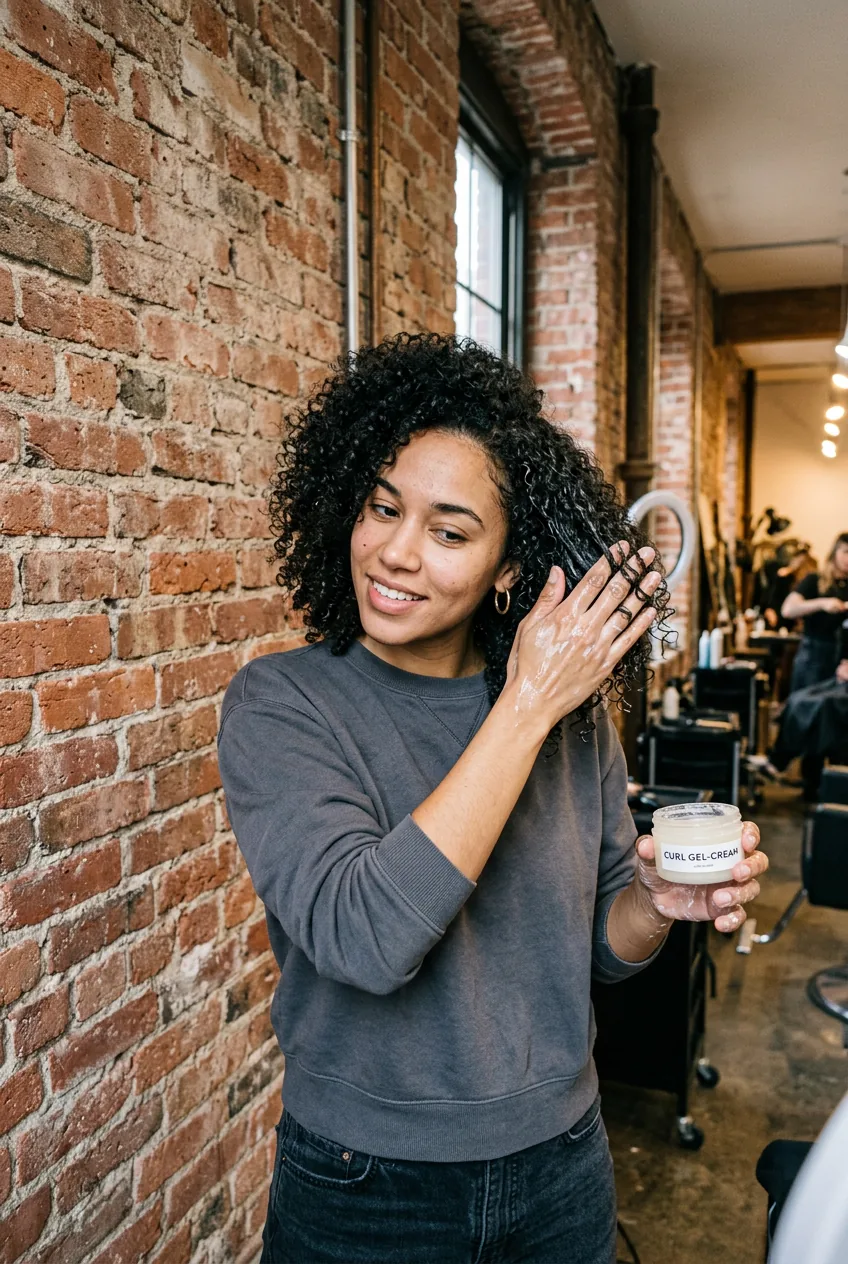
For hold, I’m obsessed with gel-cream hybrids. They give you the definition of gel without that crunchy feeling that makes your ponytail look like it could survive a hurricane. Gel-cream formulas work because they flex with your hair’s natural movement.
But here’s my controversial take: sometimes you need actual gel. The hard-hold stuff. When I’m doing a sleek low ponytail for a work presentation or date night, I want every curl locked in place. Yeah, it feels a bit stiff initially, but once you scrunch out the crunch? Pure magic.
And please, for the love of all that’s holy, use a microfiber towel or cotton t-shirt to dry your hair before styling. Terry cloth towels are the enemy of curl definition, and you can’t create a good ponytail with poorly defined starting material.
This Tutorial Changed My Game
Quick Styles for Rushed Mornings

Real talk: not every ponytail needs to be a production. Sometimes you just need to look put-together in under five minutes.
The “I Slept In” Low Pony: Spray bottle with water and a tiny bit of leave-in. Scrunch to reactivate curls. Gather low at the nape. Done. Takes two minutes max.
The “Zoom Meeting” Half-Up: Pull just the top section back, leaving the rest of your curls down. Looks intentional but requires zero skill. Plus, if your camera cuts off at your shoulders, nobody sees the rest anyway.
The “Gym Hair” High Pony: This only works if you’re actually going to work out. High placement, secure tie, and embrace the messy. Function over form, and that’s perfectly fine.
See how natural and effortless hers looks? That’s achievable, but it requires working with your hair’s natural tendencies instead of against them. The key is lowering your expectations of perfection and raising your standards for health.
When Ponytails Just Don’t Work
Nobody wants to hear this, but sometimes ponytails aren’t the answer. And that’s okay.
If your hair is freshly cut, extremely damaged, or you’re in the middle of a protein-moisture imbalance, ponytails might make everything worse. I learned this the hard way during a particularly rough patch where my curls had zero elasticity. Every ponytail left me with breakage around the hairline.
Sometimes layered cuts create too much variance in length for a clean ponytail look. Those face-framing pieces that look gorgeous when worn down can turn into flyaways when you try to pull everything back.
And let’s be honest about shrinkage. My hair looks completely different in length and volume on different days, depending on humidity, what products I used, and how I slept. Some days, there simply isn’t enough length for the ponytail style I had in mind.
The solution? Have backup styles ready. Protective alternatives can be lifesavers when ponytails aren’t cooperating. Headbands, scarves, and strategic bobby pinning have saved me more times than I can count.
Look, curly ponytails aren’t supposed to look like straight-hair ponytails, and that’s actually their superpower. They have personality, movement, and character that stick-straight styles can’t touch. But they also require a different approach, different products, and honestly, different expectations.
After years of fighting my curls into submission, I’ve learned that the best ponytails happen when I work with what I’ve got instead of trying to force what I don’t. Some days that means a perfectly polished low pony, other days it’s a messy high one that barely contains the chaos. Both are valid, both can look amazing, and both beat the alternative of spending forty-five minutes with a flat iron trying to be someone I’m not.